AJAOKUTA, ACCOUNTABILITY AND THE LIMITS OF CONFRONTATION: WHY SENATOR NATASHA AKPOTI-UDUAGHAN GOT IT WRONG The recent heated exchange between Senator Natasha Akpoti-Uduaghan and the Minister of Steel Development, Prince Shuaibu Audu, during the joint budget defence session of the National Assembly has once again drawn national attention to the long-suffering Ajaokuta Steel Company. While robust oversight is a constitutional duty of lawmakers, the tone, framing, and substance of the senator’s intervention raise important questions about method, motive, and maturity in public discourse. Senator Akpoti-Uduaghan’s comparison of Ajaokuta’s funding needs with the proposed 750-kilometre coastal road project—reportedly costing ₦15 trillion—was rhetorically striking but fundamentally flawed. National budgeting is not a zero-sum emotional contest between projects. Infrastructure priorities are determined by strategic economic frameworks, sectoral projections, financing structures, and long-term development plans. The coastal road, whether one agrees with it or not, is a transportation and logistics infrastructure project expected to unlock coastal economies and attract private capital. Ajaokuta, on the other hand, is a heavy industrial project with complex technical, legal, and financial entanglements spanning decades. To juxtapose both projects as though one automatically undermines the other oversimplifies Nigeria’s economic planning process. It creates a false dichotomy and fuels public resentment rather than constructive debate. Ajaokuta’s revival requires clarity of ownership, technology partnerships, commercial viability studies, and credible financing models—not rhetorical comparisons designed to inflame. Furthermore, questioning “the government’s real intention” in reviving the plant suggests bad faith without presenting concrete evidence of sabotage or insincerity. Oversight should interrogate timelines, procurement processes, and measurable deliverables. It should not descend into insinuations. When lawmakers imply hidden motives without substantiation, they risk eroding public trust in institutions rather than strengthening them. The senator also criticized the committee for holding meetings and engaging with the media, suggesting that these efforts have yielded minimal impact. Yet legislative oversight often begins with consultations, stakeholder engagements, and policy reviews. A project as legally entangled as Ajaokuta—especially after arbitration disputes and international contractual complications—cannot be revived by fiat. It requires deliberate restructuring. Public hearings and media engagements are part of democratic accountability, not evidence of inaction. International agreements are often subject to renegotiation, feasibility assessments, and sovereign guarantees. A pledge is not the same as disbursed capital. Many bilateral memoranda of understanding never translate into cash-backed commitments. If the Russian facility remains contingent or conditional, it is legitimate for the minister to explain its current status without being accused of dishonesty. To frame policy complexities as deception risks politicizing what should be a technical discussion. It is worth noting that Minister Shuaibu Audu assumed office within a broader reform agenda aimed at repositioning the mining and steel sectors as pillars of economic diversification. His tenure, still relatively recent in the lifespan of Ajaokuta’s decades-long stagnation, cannot be solely blamed for historical inertia. Demanding immediate transformation of a project that has been dormant for over 40 years ignores the structural realities involved. Constructive oversight would involve requesting detailed implementation timelines, insisting on performance benchmarks, and proposing legislative support mechanisms such as special purpose vehicles, concession frameworks, or public-private partnerships. It would not rely primarily on dramatic comparisons or adversarial posturing. Moreover, public confidence in Ajaokuta’s revival depends on unified messaging from political leaders. Investors—local and international—observe these proceedings. When they see discord framed as distrust between legislative and executive arms, it reinforces perceptions of instability. Industrial megaprojects require investor confidence anchored in predictable governance. This is not to suggest that Senator Akpoti-Uduaghan should remain silent. On the contrary, her constituency in Kogi Central has a legitimate interest in Ajaokuta’s success. Her advocacy for the plant is understandable and commendable in principle. However, advocacy must be strategic. Effective lawmakers build coalitions, engage quietly where necessary, and apply pressure through structured channels. Confrontation for its own sake may win applause in partisan circles but rarely accelerates complex industrial reforms. In the end, Nigerians deserve transparency, realism, and responsibility. They deserve leaders who debate vigorously yet respectfully, who challenge figures with facts rather than insinuations, and who recognize that economic transformation is a marathon, not a media moment. Ajaokuta is too important to become a stage for antagonism. It must instead be the arena for collaboration, clarity, and credible commitment. Only then can the promise of Nigeria’s steel dream move from perpetual debate to practical delivery.
No one disputes that Ajaokuta Steel Plant is a national tragedy of stalled ambition. For over four decades, successive governments have pledged to revive it. Billions of dollars have been expended with little to show. It is therefore understandable that emotions run high whenever the plant is discussed. However, passion must not eclipse prudence, especially in a forum as consequential as a joint budget defence session.
Perhaps most contentious was her reference to the 2019 Nigeria–Russia bilateral agreement, under which $1.45 billion was reportedly pledged for Ajaokuta. Her caution that the minister should not “mislead Nigerians” implies that he may have misrepresented the status of that agreement. While transparency is essential, such accusations should be supported by documentary clarity rather than delivered in confrontational soundbites.
There is also the matter of decorum. Budget defence sessions are not campaign rallies. They are structured engagements where ministers present fiscal plans and legislators scrutinize them. Heated exchanges may generate headlines, but they do little to foster collaborative solutions. Nigeria’s steel sector has suffered not just from funding deficits but from policy inconsistency and political theatrics. What it needs now is stability.
The revival of Ajaokuta demands less grandstanding and more governance. It requires technical audits, credible investors, dispute resolution mechanisms, and political alignment. It also requires acknowledging that no single minister or senator can single-handedly fix what decades of mismanagement created.
Senator Akpoti-Uduaghan’s passion for Ajaokuta is not in question. What is in question is whether her approach during the budget defence advanced the cause of steel revival or merely amplified political friction. At a time when Nigeria seeks industrial rebirth, the country needs statesmanship more than spectacle.
Vision
“To have a virile sustainable and inclusive steel industry that can compete globally and be driving for industrial and economic growth of our country while maintaining internationally acceptable standard”
Mission
“To ensure industry and Government strengthen the capability and competitiveness of Nigeria steel industry to achieve self sufficiency in steel production by providing policy support and guardian and to help mitigate potential challenges and barriers that are preventing the growth of Nigeria steel industry”
MINING WEEK “Policy for Accelerating Nigeria’s Iron and Steel Industry Development”
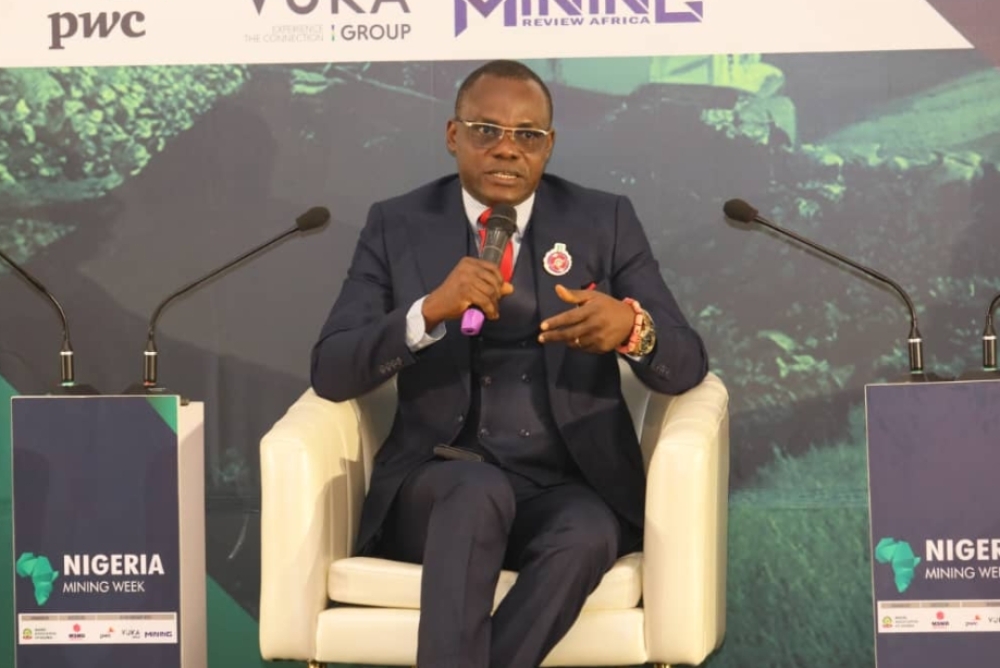
Representative of the Honourable Minister of Steel Development, Dr. Chris Osa Isokpunwu, Permanent Secretary of the Ministry, on the panel discussing the topic, “Policy for Accelerating Nigeria’s Iron and Steel Industry Development” on Wednesday 20th November 2024 at the Nigeria Mining Week.
The Permanent Secretary stated that the Policy thrust of the Federal Government is geared towards ensuring it provides an enabling environment; revamping the moribund Steel Companies in the country; collaborate with the private sector for the development of the Steel Sector, among others.
BI-LATERAL RELATION: INDIAN BUSINESS INVESTORS VISIT MINISTRY ON STEEL SECTOR DEPARTMENT
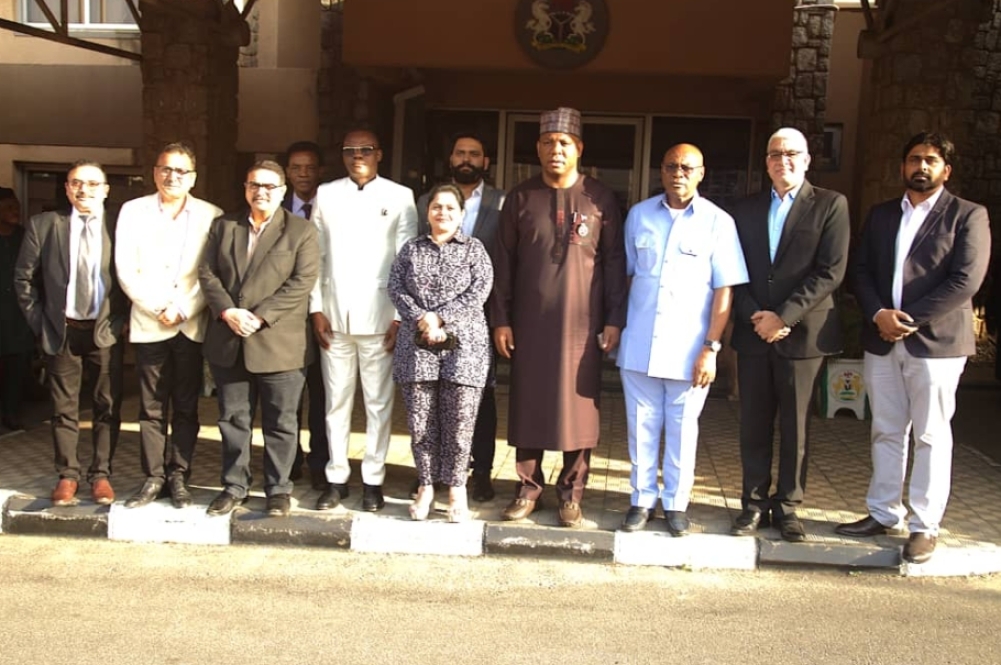
The Minister of Steel Development, Prince Shuaibu Abubakar Audu, noting the huge potentials in the Steel Sector, disclosed that the country is happy to explore various aspects of investment and is keen to work with the Indian community, this happened when the Indian Business Investors paid a visit to the Ministry’s Headquarters on Monday 18th November 2024 to find ways to deepen bi-lateral relations with the country on the development of the steel sector.
On her part, Rekha Sharma, leader of the delegation proposed setting up working groups to look into areas of investments as well as organizing a Nigerian-Indian Road Show in India to showcase the vast opportunities in the Nigerian Steel Sector to India investors.
PRESS CONFERENCE ON THE NATIONAL STEEL SUMMIT
Protocol
The Permanent Secretary, Ministry of Steel Development, Dr. Chris Osa Isokpunwu,
Heads of Departments and Agencies of Ministry of Steel Development,
Gentlemen of Press,
Ladies and Gentlemen.
It is essential for me to brief the media for proper sensitisation of the general public especially the Steel sector stakeholders, Donor Agencies, Academia, Policy makers, Financial Institutions, Large and Small Scale Industrialists, Artisans etc on the upcoming maiden National Steel Summit scheduled to hold on 16th – 17th July, 2025 at the Nigerian Airforce Conference Centre, Kado, Abuja starting from 9am on both days.
The Ministry of Steel Development as part of its efforts to rebuild and unlock the nation’s Steel potentials is hosting its inaugural National Steel Summit 2025 themed; “Rebuilding and Consolidating Nigeria’s Steel Industry: Collaborative Action for Sustainable Growth and Global Competitiveness”. The Summit which aims to assemble key stakeholders to appraise the current status of the industry, explore investment opportunities, identify policy and infrastructural needs and adopt a consensus way forward for the revival and sustainable Development of the Nigeria’s Steel sector will be declared open by the President of the Federal Republic of Nigeria, His Excellency, Asiwaju Bola Ahmed Tinubu, GCFR.
This maiden Summit coming at about the two (2) years anniversary of President Bola Ahmed Tinubu’s Renewed Hope Agenda will accord the Ministry an opportunity to share the Renewed Hope vision, the milestones recorded so far and receive feedbacks from stakeholders. The stakeholders will be given an even platform to interact on their mutual areas of collaboration especially in market promotion and infrastructure sharing windows for competitive production. There will be executive parley amongst selected policy makers, Paper presentations, Panel Discussions, Questions and Answers, Exhibitions etc and I want to assure all stakeholders that every contribution would be given adequate consideration in the emerging Steel sector in Nigeria.
Despite the chequered history of Steel development in Nigeria which dates back to 1958, the present Renewed Hope Administration of President Bola Ahmed Tinubu, GCFR is already pushing the right buttons to ensure the emergence of a virile Steel industry in Nigeria along the following key mandate instructions:
i) That the utilization of the abundant Steel Raw Materials in Nigeria for the substitution of imported Steel products which has been draining our foreign exchange to the tune of over $4Billion USD per annum;
ii) That we enthrone a regulatory regime that would ensure sustainable Steel and Non-Ferrous Metals production in Nigeria for both local and international markets;
iii) That we set and monitor quality standards for local and foreign Steel products to eradicate structural failures in different construction projects in Nigeria; and
iv) Generate massive employment for our teeming youths and promote technology transfer for Nigeria’s economic development.
The media is aware that the renewed hope efforts in the last 20months has already started yielding notable milestones and more will be harvested in due course:
The technical sessions and panel discussions during the event will x-ray critical areas of the industry from diverse perspectives including:
The role of the Steel industry in any modern economy cannot be over emphasised and I enjoin the media houses to use their various platforms to partner with the Ministry of Steel Development to create a National Steel sector that will service critical sectors of the Nigerian economy such as:
As we look forward to a robust exchange of ideas, business networking and deal closures as well as mutual partnership to move the agenda from just rhetoric to critical, collaborative, and progressive actions. Ultimately, we shall position Nigeria as a major Steel hub for Sub-Sahara Africa whilst making significant contribution to national GDP.
We look forward to welcoming you all to this great event in the history of Steel Development in Nigeria.
GOODWILL ADDRESS BY HONOURABLE MINISTER OF STEEL DEVELOPMENT, PRINCE SHUAIBU ABUBAKAR AUDU, AT THE 9TH EDITION OF THE NIGERIA MINING WEEK (NMW) HOLDING AT THE ABUJA CONTINENTAL HOTEL, ABUJA.
Protocols
The Honourable Minister of Solid Minerals Development, Dr. Dele Alake, My brother and Host of the 2024 Nigeria Mining Week Your Excellencies, the State Governors here present Other Ministers of the Federal Republic here present;
The Chairmen and Members of the National Assembly Committees on Solid Minerals and Steel here present;
The National President, Miners Association of Nigeria, Mr. Dele Ayanleke and the entire leadership of the Association for Organizing the 2024 Nigeria Mining Week;
The Event Director – Mining, Vuka Group, Mr. Samukelo Madlabane and the entire Team of the Vuka Group, Representatives of PricewaterhouseCoopers (PwC) Members of the Advisory Board of the 2024 Nigeria Mining Week
The Permanent Secretary, Ministry of Solid Minerals Development, Dr. Mary Ogbe;
The Heads of Government Parastatals and Agencies here present;
Stakeholders here present from Africa and beyond;
Gentlemen and Ladies of the Press;
Ladies and Gentlemen!
PREAMBLE
I am highly honoured to make this ministerial address at the 9th Annual Nigeria Mining Week 2024 with the theme ‘Building the Mining Sector to be the Cornerstone of Nigeria’s economy. The annual mining week event has evolved over time to be a major platform where different stakeholders in the minerals sector are assembled for robust engagements on the best strategies to advance the course of harnessing our natural resources endowments for economic development. I must not fail to appreciate my big brother and colleague, Minister of Solid Minerals Development, Dr. Dele Alake for the collaborative partnership between us because of the obvious nexus between the Solid Minerals and the Iron and Steel sectors.
Distinguished Ladies and Gentlemen, it is important to highlight that the focus of the 2024 Annual Mining Week equally resonates with the priorities of our visionary leader, President Bola Ahmed Tinubu, GCFR especially as he targets;
Reforming the economy to deliver sustained inclusive growth Unlocking Energy and Natural resources for sustainable development and Accelerate diversification through industrialization, digitization, creative arts, manufacturing and innovation. I have carefully perused the thematic topics that will be deliberated on at this event and the presenters that will lead the discussions especially as it relates to the “Policy Choices for Accelerating Nigeria’s Iron and Steel Industry Development”. I am confident that the Presenters/Discussants will do justice to the topics and deliver very constructive conversations and shared-insights that will elicit progressive engagements aligning with the ideals of the 8-Point Agenda of President Tinubu’s Administration which targets reinvigoration of the steel industry to serve as a catalyst for Nigeria’s industrialization. .
ONGOING ACTIVITIES AND MILESTONES UNDER THE PRESENT ADMINISTRATION
Following the discouraging history of Steel Development in Nigeria in the past four and a half decades, the President Bola Ahmed Tinubu’s administration has shown tremendous willingness to address the protracted challenges facing the industry. This noble decision of Mr. President is hinged on the following key objectives to be driven by the new Ministry of Steel Development;
To lead the campaign for the utilization of the abundant Steel Raw Materials in Nigeria for the substitution of imported Steel products which has been draining our foreign exchange to the tune of over $4Billion USD annually;
To evolve a regulatory regime that would ensure sustainable Steel and other Metals production in Nigeria for both local and international markets;
To set and monitor quality standards for local and foreign Steel products to curb structural failures in different construction projects in Nigeria and Generate employment and promote technology transfer for Nigeria’s economic development. We have taken this mandate since assumption of office on 21st August, 2023 with every sense of responsibility and the following milestones/activities were recorded;
Ajaokuta Steel Company Limited (ASCL)
The Federal Government has decided to privatise the fore-most integrated Steel Plant at Ajaokuta and its captive Iron Ore Mine at Itakpe and we have kick-started the process to ensure the accomplishment of the above. We recently signed a Memorandum of Understanding (MoU) with the original builders of the Plant, Messrs. TPE and their partners in Moscow, Russia. The procurement process for the selection of the technical audit firm has been completed and the auditing of the entire plant will commence before end of the year.
Engineering Workshops at ASCL
We are working to also sign a Memorandum of Understanding with Ministry of Defence and Defence Industry Corporation of Nigeria (DICON) for the production of major input materials for the manufacturing of military hardware using the Five (5) Engineering Workshops in ASCL.
Aluminum Smelter Company of Nigeria (AlSCON)
A high-level executive meeting with Mr. President was held in July, 2024 and we were given a matching order to ensure that all issues encumbering the commencement of operation be resolved. Relevant stakeholders are currently working to address critical issues of sustainable & competitive gas pricing regime, power generation and evacuation into the national grid, ownership tussle and dredging of Imo River.
Prospective New Investments into the Sector
We have also followed up on;
The landmark investment resolution reached between Mr. President and the President of Jindal Steel Group in India on the sidelines of the G-20 Meeting in New Delhi in 2023. Messrs. Jindal Steel Group has pledged to invest about $5 billion USD for the setting up of another 5 million tons steel plant in Nigeria and we are already providing the enabling environment through different organs of Government. This singular investment alone will require over 20 million tons of different steel raw materials to feed the Plant.
The Inner Galaxy Group’s is investing about USD 300 million in a new Steel Plant in Ogun State to produce Galvanized Steel Profiles for the Automotive Industry.
The Bell Oil and Gas USD 100 Million investment in Pipe Value Assembly and Composite Pipe manufacturing Facility in Lekki Free Trade Zone, Lagos and a host of others.
THE BOOT-CAMP TRAINING PROGRAMME
We are currently evaluating applications from over 225,000 online applications as at close of portal for the Pilot Boot Camp Training Programme for Nigerian youths for Technical Capacity Building in Welding/Fabrication, Industrial Foundry & Metallurgy, Instrumentation, System Control and Mechanical Maintenance. The idea is to train and develop the technical capacities of 700 selected Trainees and support them with equipment to become self-reliant and prepare a new set middle level manpower for the emerging Steel Industry in Nigeria. We are also liaising with tertiary and secondary education authorities in Nigeria to evolve sustainable mechanisms that will elicit interest of the youths in Material Sciences for sustainable manpower supply of the Metals Industry.
OTHER STRATEGIC INITIATIVES
Other Strategic initiatives we have embarked upon to re-position the Metals Industry include:
National Steel Summit
I have taken time to inspect a number of local Steel company operators in Nigeria to appreciate their issues and put the necessary fiscal incentives to support their investment. Some of the issues raised include dumping of sub-standard imported products, Energy supply, High cost of Scraps as input materials, forex for importation of equipment and logistics challenges. We shall be organizing a Summit of all stakeholders within the first quarter of 2025 to agree on a wholistic measures to promote our local operators.
Regulatory Frameworks
We collaborated with the National Assembly Committees on Steel Development for quick passage of the following bills:
National Metallurgical Training Institute, Onitsha Establishment Bill;
Metallurgical Industry Bill;
and amendment of National Steel Council Act.
Roadmap for the Steel Industry
As the Regulator cum Administrator of the Metals Industry in Nigeria, we have developed an in-house Ten (10) year sectoral Roadmap for the sustainable growth of the sector with a target production of 10 million Tons of Crude Steel and other metallic products per annum. The document will be ready for presentation to stakeholders at the next summit for their inputs and review where necessary and final adoption by stakeholders. The final Roadmap Document would provide guidance to all industry players and prospective investors on the policy direction of the Federal Government of Nigeria.
CONCLUSION
I want to conclude by drawing our attention to the importance of adopting synergic approach to accomplishing the objectives of the Government Policy on Value-Addition to our solid mineral endowments. Complimentary to the sterling efforts and investments of the Federal Government in Geo-Science Data Generation, we must commensurately drive Value-Addition to our mineral resources to achieve the desired quick wins from Mines to Market.
The Ministry of Steel Development is driving strong initiatives of Value Proposition for accelerated Metallic Minerals Development and therefore urge all industry stakeholders to support Government to convert our abundant mineral resources in Nigeria to semi-finished and finished steel products which will generate massive employment for our teeming youths, significantly improve the economic well-being of our people and meaningfully contribute to Nation’s GDP.
I wish you all a successful deliberation at this 9th Edition of the Nigeria Mining Week.
God bless the Federal Republic of Nigeria.
The attention of the Federal Ministry of Steel Development has been drawn to recent media reports regarding the future of the Ajaokuta Steel Company Limited (ASCL).
While we note the concerns expressed, it is important to state that the Federal Government remains firmly committed to the development of Nigeria’s steel sector, including the resuscitation of ASCL.
A comprehensive technical and financial audit of the plant is presently underway to ensure that any decision taken is transparent, data-driven and in the best interest of Nigeria. The overall assessment of the previous technical audit report dated 2018 maintained that the general status of the Steel Plant is in robust condition except for normal deterioration of replaceable parts and recommended automation of manual control systems for improved efficiency. The Ministry remains confident that the updated audit will provide a sound basis for decisive action that advances Nigeria’s industrial aspirations.
The Federal Government is determined to build a competitive and modern steel industry that supports national industrialization and infrastructure growth.
Salamatu Jibaniya
Head, Press and Public Relations Department
for: Ministry of Steel Development
2024/2025 BUDGET APPRAISAL AND 2026 BUDGET DEFENCE DRIVE STEEL SECTOR OVERSIGHT
Prince Shuaibu Abubakar Audu, Honourable of Steel Development (L) with Honorable Dr. Zainab Gimba (R), Chairman, House of Representatives Committee on Steel Development during the Ministry's appearance before the House of Representatives Committee on Steel for the Appraisal of the 2024/2025 Budget Performance and the Defence of the 2026 Budget Proposal of the Ministry, held on Thursday 12th February 2026 in Abuja.
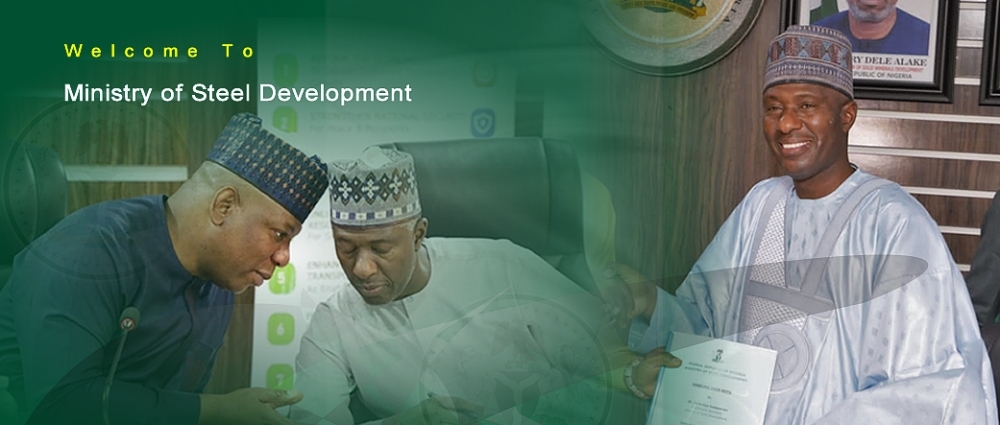
STEEL MINISTER AND SENATE COMMITTEE LEADERS MEET FOR 2024/2025 BUDGET APPRAISAL AND 2026 BUDGET DEFENCE AT NATIONAL ASSEMBLY
Senator Natasha Akpoti-Uduaghan, Vice-Chairman, Senate Committee on Steel; Senator Patrick Ndubueze, Chairman Senate Committee on Steel and the Honourable Minister of Steel Development, Prince Shuaibu Abubakar Audu during the Ministry's appearance before the Senate Committee on Steel Development for the Appraisal of the 2024/2025 Budget Performance and the Defence of the 2026 Budget Proposal of the Ministry