AJAOKUTA, ACCOUNTABILITY AND THE LIMITS OF CONFRONTATION: WHY SENATOR NATASHA AKPOTI-UDUAGHAN GOT IT WRONG The recent heated exchange between Senator Natasha Akpoti-Uduaghan and the Minister of Steel Development, Prince Shuaibu Audu, during the joint budget defence session of the National Assembly has once again drawn national attention to the long-suffering Ajaokuta Steel Company. While robust oversight is a constitutional duty of lawmakers, the tone, framing, and substance of the senator’s intervention raise important questions about method, motive, and maturity in public discourse. Senator Akpoti-Uduaghan’s comparison of Ajaokuta’s funding needs with the proposed 750-kilometre coastal road project—reportedly costing ₦15 trillion—was rhetorically striking but fundamentally flawed. National budgeting is not a zero-sum emotional contest between projects. Infrastructure priorities are determined by strategic economic frameworks, sectoral projections, financing structures, and long-term development plans. The coastal road, whether one agrees with it or not, is a transportation and logistics infrastructure project expected to unlock coastal economies and attract private capital. Ajaokuta, on the other hand, is a heavy industrial project with complex technical, legal, and financial entanglements spanning decades. To juxtapose both projects as though one automatically undermines the other oversimplifies Nigeria’s economic planning process. It creates a false dichotomy and fuels public resentment rather than constructive debate. Ajaokuta’s revival requires clarity of ownership, technology partnerships, commercial viability studies, and credible financing models—not rhetorical comparisons designed to inflame. Furthermore, questioning “the government’s real intention” in reviving the plant suggests bad faith without presenting concrete evidence of sabotage or insincerity. Oversight should interrogate timelines, procurement processes, and measurable deliverables. It should not descend into insinuations. When lawmakers imply hidden motives without substantiation, they risk eroding public trust in institutions rather than strengthening them. The senator also criticized the committee for holding meetings and engaging with the media, suggesting that these efforts have yielded minimal impact. Yet legislative oversight often begins with consultations, stakeholder engagements, and policy reviews. A project as legally entangled as Ajaokuta—especially after arbitration disputes and international contractual complications—cannot be revived by fiat. It requires deliberate restructuring. Public hearings and media engagements are part of democratic accountability, not evidence of inaction. International agreements are often subject to renegotiation, feasibility assessments, and sovereign guarantees. A pledge is not the same as disbursed capital. Many bilateral memoranda of understanding never translate into cash-backed commitments. If the Russian facility remains contingent or conditional, it is legitimate for the minister to explain its current status without being accused of dishonesty. To frame policy complexities as deception risks politicizing what should be a technical discussion. It is worth noting that Minister Shuaibu Audu assumed office within a broader reform agenda aimed at repositioning the mining and steel sectors as pillars of economic diversification. His tenure, still relatively recent in the lifespan of Ajaokuta’s decades-long stagnation, cannot be solely blamed for historical inertia. Demanding immediate transformation of a project that has been dormant for over 40 years ignores the structural realities involved. Constructive oversight would involve requesting detailed implementation timelines, insisting on performance benchmarks, and proposing legislative support mechanisms such as special purpose vehicles, concession frameworks, or public-private partnerships. It would not rely primarily on dramatic comparisons or adversarial posturing. Moreover, public confidence in Ajaokuta’s revival depends on unified messaging from political leaders. Investors—local and international—observe these proceedings. When they see discord framed as distrust between legislative and executive arms, it reinforces perceptions of instability. Industrial megaprojects require investor confidence anchored in predictable governance. This is not to suggest that Senator Akpoti-Uduaghan should remain silent. On the contrary, her constituency in Kogi Central has a legitimate interest in Ajaokuta’s success. Her advocacy for the plant is understandable and commendable in principle. However, advocacy must be strategic. Effective lawmakers build coalitions, engage quietly where necessary, and apply pressure through structured channels. Confrontation for its own sake may win applause in partisan circles but rarely accelerates complex industrial reforms. In the end, Nigerians deserve transparency, realism, and responsibility. They deserve leaders who debate vigorously yet respectfully, who challenge figures with facts rather than insinuations, and who recognize that economic transformation is a marathon, not a media moment. Ajaokuta is too important to become a stage for antagonism. It must instead be the arena for collaboration, clarity, and credible commitment. Only then can the promise of Nigeria’s steel dream move from perpetual debate to practical delivery.
No one disputes that Ajaokuta Steel Plant is a national tragedy of stalled ambition. For over four decades, successive governments have pledged to revive it. Billions of dollars have been expended with little to show. It is therefore understandable that emotions run high whenever the plant is discussed. However, passion must not eclipse prudence, especially in a forum as consequential as a joint budget defence session.
Perhaps most contentious was her reference to the 2019 Nigeria–Russia bilateral agreement, under which $1.45 billion was reportedly pledged for Ajaokuta. Her caution that the minister should not “mislead Nigerians” implies that he may have misrepresented the status of that agreement. While transparency is essential, such accusations should be supported by documentary clarity rather than delivered in confrontational soundbites.
There is also the matter of decorum. Budget defence sessions are not campaign rallies. They are structured engagements where ministers present fiscal plans and legislators scrutinize them. Heated exchanges may generate headlines, but they do little to foster collaborative solutions. Nigeria’s steel sector has suffered not just from funding deficits but from policy inconsistency and political theatrics. What it needs now is stability.
The revival of Ajaokuta demands less grandstanding and more governance. It requires technical audits, credible investors, dispute resolution mechanisms, and political alignment. It also requires acknowledging that no single minister or senator can single-handedly fix what decades of mismanagement created.
Senator Akpoti-Uduaghan’s passion for Ajaokuta is not in question. What is in question is whether her approach during the budget defence advanced the cause of steel revival or merely amplified political friction. At a time when Nigeria seeks industrial rebirth, the country needs statesmanship more than spectacle.
Vision
“To have a virile sustainable and inclusive steel industry that can compete globally and be driving for industrial and economic growth of our country while maintaining internationally acceptable standard”
Mission
“To ensure industry and Government strengthen the capability and competitiveness of Nigeria steel industry to achieve self sufficiency in steel production by providing policy support and guardian and to help mitigate potential challenges and barriers that are preventing the growth of Nigeria steel industry”
MINISTRY OF STEEL DEVELOPMENT PARTNERS NIPC ON REVIVAL OF NMTI/NSRMEA
In line with the Renewed Hope Agenda of the Bola Ahmed Tinubu’s Administration and in achieving its mandate of ensuring that the nation’s Steel Sector contribute to the sustainable development of the economy and grow the Gross Domestic Product (GDP), the Ministry of Steel Development is to collaborate with the Nigerian Investment Promotion Commission for the development of the sector in general and the Revitalization and Operationalization of the National Steel Raw Materials Exploration Agency (NSRMEA) Kaduna and the National Metallurgical Institute, Onitsha.
This was disclosed by the Honourable Minister of State, Ministry of Steel Development, His Excellency, Uba Maigari Ahmadu when he played host to the Executive Secretary/CEO of the Nigerian Investment Promotion Commission, Aisha Rimi in the Ministry’s Headquarters on Thursday, 23rd November, 2023 in Abuja.
He enumerated the areas of collaboration to include among others: Organizing local and international investment fora for relevant stakeholders to showcase the full potentials of the NMTI with the view of attracting investments and funding for modernizing and upgrading the institute’s facilities, curriculum, and training programs to meet industry international best standards and demand; Develop Policy Reforms and incentives that would be inclusive but not limited to legal, governance, finance tax incentives, and regulatory reforms that would reposition the institute to contribute more meaningfully to national manpower and infrastructure development.
The Minister listed more areas of collaboration to include: Identifying local and international multilateral, multinational, Institutional and venture capitalists who can inject technical and financial capital into revitalizing the institute and position it as a center of excellence for metallurgical training and skills development; Establishing a PPP (Public Private Partnership) framework for the revival of NMTI that would involve engaging with private sector stakeholders, such as steel companies, mining firms, and educational institutions, to form partnerships aimed at modernizing the institute and aligning its training programs with industry.
Continuing, he identified areas of partnership with NIPC for NSRMEA to comprise: Accelerating Investment interest from both Local and International Investments in Exploration Projects, with special interest in steel raw materials such as Iron ore, Manganese, Coal, Refractory, Limestone, through establishing partnerships with mining companies and exploration firms; Organizing targeted investor outreach programmes to engage potential investors interested in supporting the exploration and development of steel raw materials as well as Advocating for Policy Reforms and incentives to encourage private sector investment in raw materials exploration.
Additionally, the Minister disclosed that, Niger Extraction Company Ltd, a Nigerian Company registered to undertake mining and steel development has sent in a proposal for the establishment of a $300m Steel Plant in Niger State, a development which according to him, indicates that the Steel Sector is set to take off and deliver on its mandate.
Maigari Ahmadu expressed the Ministry’s willingness to leverage on the expertise and networks of NIPC, noting that the collaborative efforts of both Organisations would help attract private sector investment, modernize exploration techniques, and enhance the capacity of NMTI and NSRMEA to fulfill their mandates.
Also speaking, the Permanent Secretary, Ministry of Steel Development/Ministry of Solid Minerals Development, Dr. Mary A Ogbe, while expressing optimism that the collaboration between the Ministry of Steel Development and the Nigerian Investment Promotion Commission is a step in the right direction, reiterated the Ministry’s commitment to ensure the goals set during the deliberations are achieved. She added that it was time the Steel Sector brought the needed prosperity to the people of Nigeria.
The Permanent Secretary proposed the establishment of a Technical Working Group (TWG) with members drawn from the Ministry of Steel Development and NIPC, with the sector specific experts who will develop a framework that will enhance the development of the sector on a general scale and the National Metallurgical Institute, Onitsha and National Steel Raw Materials Exploration Agency (NSRMEA) Kaduna,
specifically.
In her remarks, the Executive Secretary/CEO of Nigerian Investment Promotion Commission, Aisha Rimi stated that the Commission’s mandate is to provide assistance to investors seeking to enter the and those that are already in the country. She disclosed that NIPC has extensive and robust Departments that assist in carrying out adequate care and after care for investment and investors.
Rimi assured of the Commission’s commitment to ensure all assistance is given to the Steel Sector to promote direct foreign investment into the country.
FG COMMITS TO INSURANCE COVERAGE -UNVEILS OVERHAULING STRATEGY FOR NIGERIA’S STEEL SECTOR REVIVAL
The Federal Government through the newly created Ministry of Steel Development has taken significant steps towards rejuvenating the nation’s steel sector by announcing a comprehensive insurance coverage for all ongoing steel projects within the country.
The Hon. Minister of Steel Development, Prince Shuaibu Abubakar Audu made this declaration during a crucial meeting with key agencies under the Ministry. These are namely- Ajaokuta Steel Company Limited; National Iron -Ore Mining Company, Itakpe; National Steel Raw Materials Exploration Agency; Metalurgical Training Institute and National Metallurgical Development Center, Jos.
During the interface with the DGs of Agencies, Prince Audu explained that the deliberate policy of the present administration to introduce insurance coverage for steel projects is a critical step to mitigate the risks and uncertainties inherent in large scale developmental endeavors.
The Hon. Minister further stated that by providing this insurance coverage, the government aims to foster an environment that is conducive to attracting investments in to the steel sector, securing financing and expediting the successful completion of various steel related initiatives across the country.
To this end, Prince Audu noted that to ensure a structured successful implementation of this policy, the Ministry would outline a comprehensive two- year activation plan- adding, the strategic plan is designed to catalyze the revival of all steel associated interventions: Which underscored a steadfast commitment to achieving tangible progress within stipulated timeframe.
Continuing, the Hon. Minister for Steel Development affirmed that the journey towards revitalizing the steel sector is beyond insurance coverage. He said: “the government has devised a comprehensive overhauling strategy to tackle the multi- faceted challenges impeding the sector’s growth. Central to this strategy is the optimization of skilled labour and enhancing security measures to ensure safe and productive working atmosphere”.
While citing other indices for solutions, Prince Audu listed them to include- the rehabilitation of the rail infrastructure connecting the Itakpe and Ajaokuta Steel Complexes; a functioning rail network for transportation of raw materials and finished products. This, the Hon. Minister noted, has the potentials to significantly boost the operational efficiency of these complexes, thereby positively influencing the entire street value chain.
The attention of the Federal Ministry of Steel Development has been drawn to recent media reports regarding the future of the Ajaokuta Steel Company Limited (ASCL).
While we note the concerns expressed, it is important to state that the Federal Government remains firmly committed to the development of Nigeria’s steel sector, including the resuscitation of ASCL.
A comprehensive technical and financial audit of the plant is presently underway to ensure that any decision taken is transparent, data-driven and in the best interest of Nigeria. The overall assessment of the previous technical audit report dated 2018 maintained that the general status of the Steel Plant is in robust condition except for normal deterioration of replaceable parts and recommended automation of manual control systems for improved efficiency. The Ministry remains confident that the updated audit will provide a sound basis for decisive action that advances Nigeria’s industrial aspirations.
The Federal Government is determined to build a competitive and modern steel industry that supports national industrialization and infrastructure growth.
Salamatu Jibaniya
Head, Press and Public Relations Department
for: Ministry of Steel Development
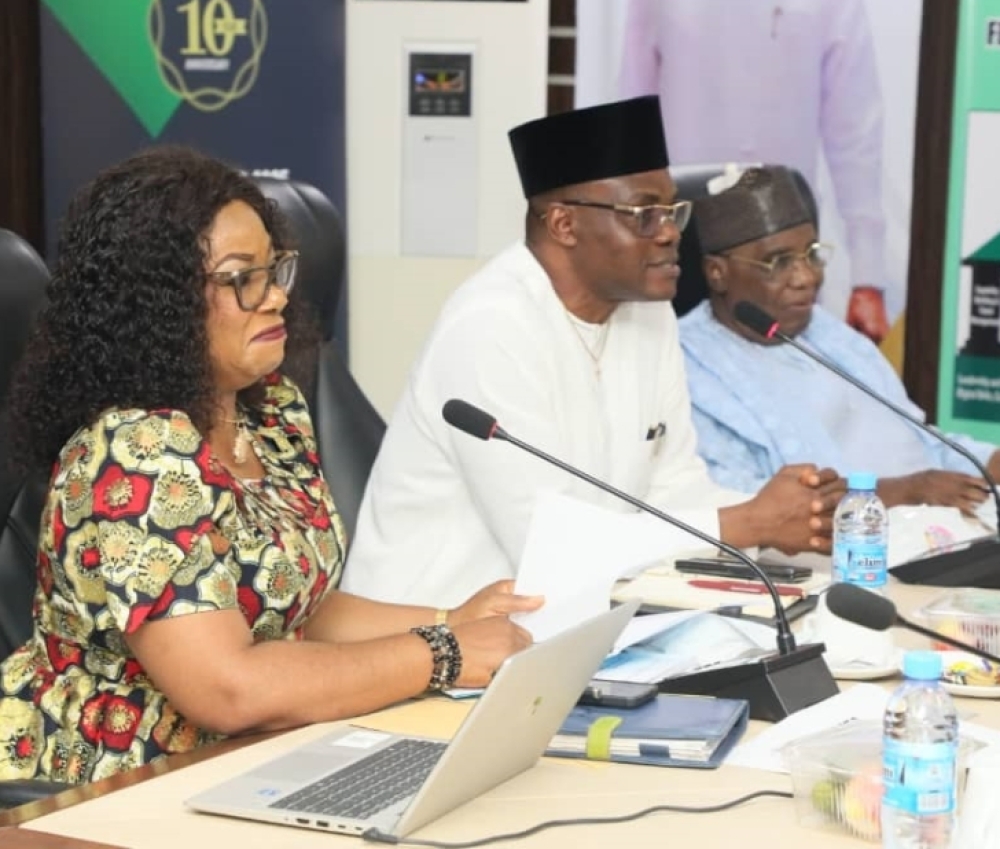
2024/2025 BUDGET APPRAISAL AND 2026 BUDGET DEFENCE DRIVE STEEL SECTOR OVERSIGHT
Prince Shuaibu Abubakar Audu, Honourable of Steel Development (L) with Honorable Dr. Zainab Gimba (R), Chairman, House of Representatives Committee on Steel Development during the Ministry's appearance before the House of Representatives Committee on Steel for the Appraisal of the 2024/2025 Budget Performance and the Defence of the 2026 Budget Proposal of the Ministry, held on Thursday 12th February 2026 in Abuja.
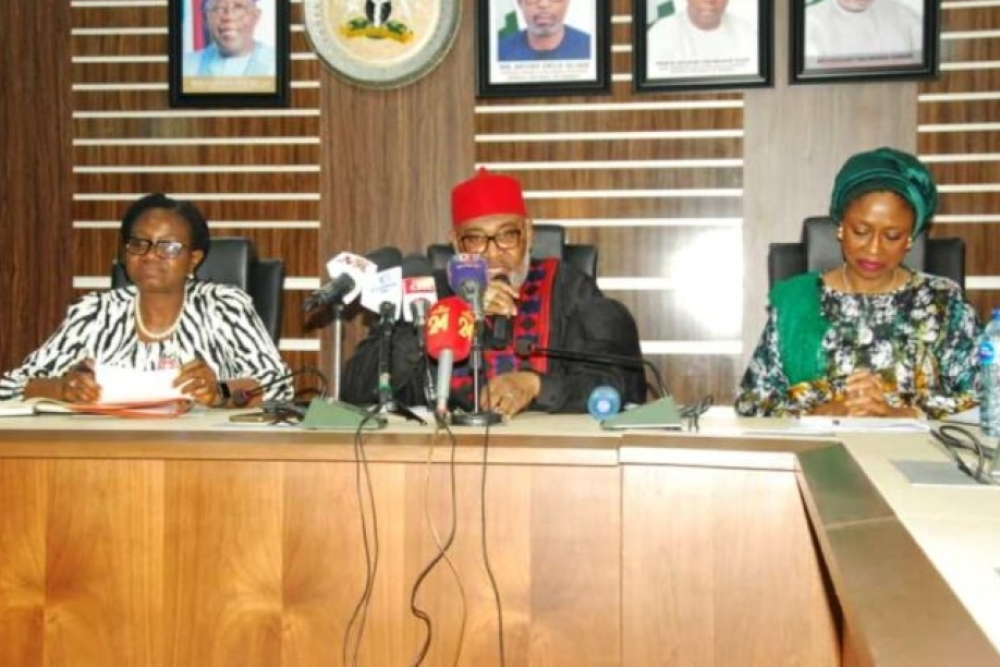
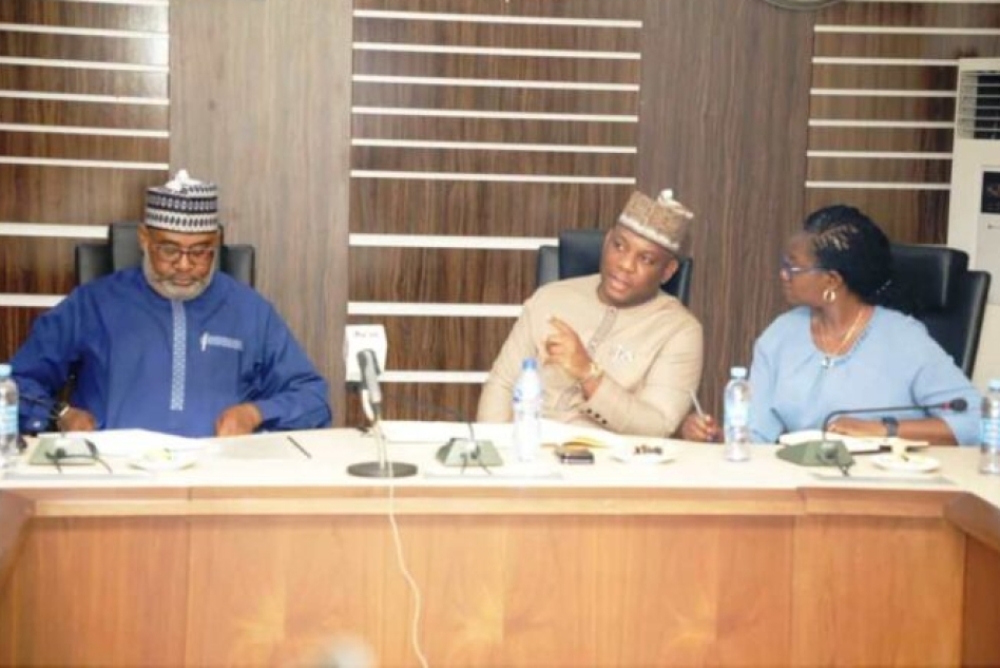
STEEL MINISTER AND SENATE COMMITTEE LEADERS MEET FOR 2024/2025 BUDGET APPRAISAL AND 2026 BUDGET DEFENCE AT NATIONAL ASSEMBLY
Senator Natasha Akpoti-Uduaghan, Vice-Chairman, Senate Committee on Steel; Senator Patrick Ndubueze, Chairman Senate Committee on Steel and the Honourable Minister of Steel Development, Prince Shuaibu Abubakar Audu during the Ministry's appearance before the Senate Committee on Steel Development for the Appraisal of the 2024/2025 Budget Performance and the Defence of the 2026 Budget Proposal of the Ministry